
Serving in 132 Languages: A Luxury or a Necessity?

Hello everyone,
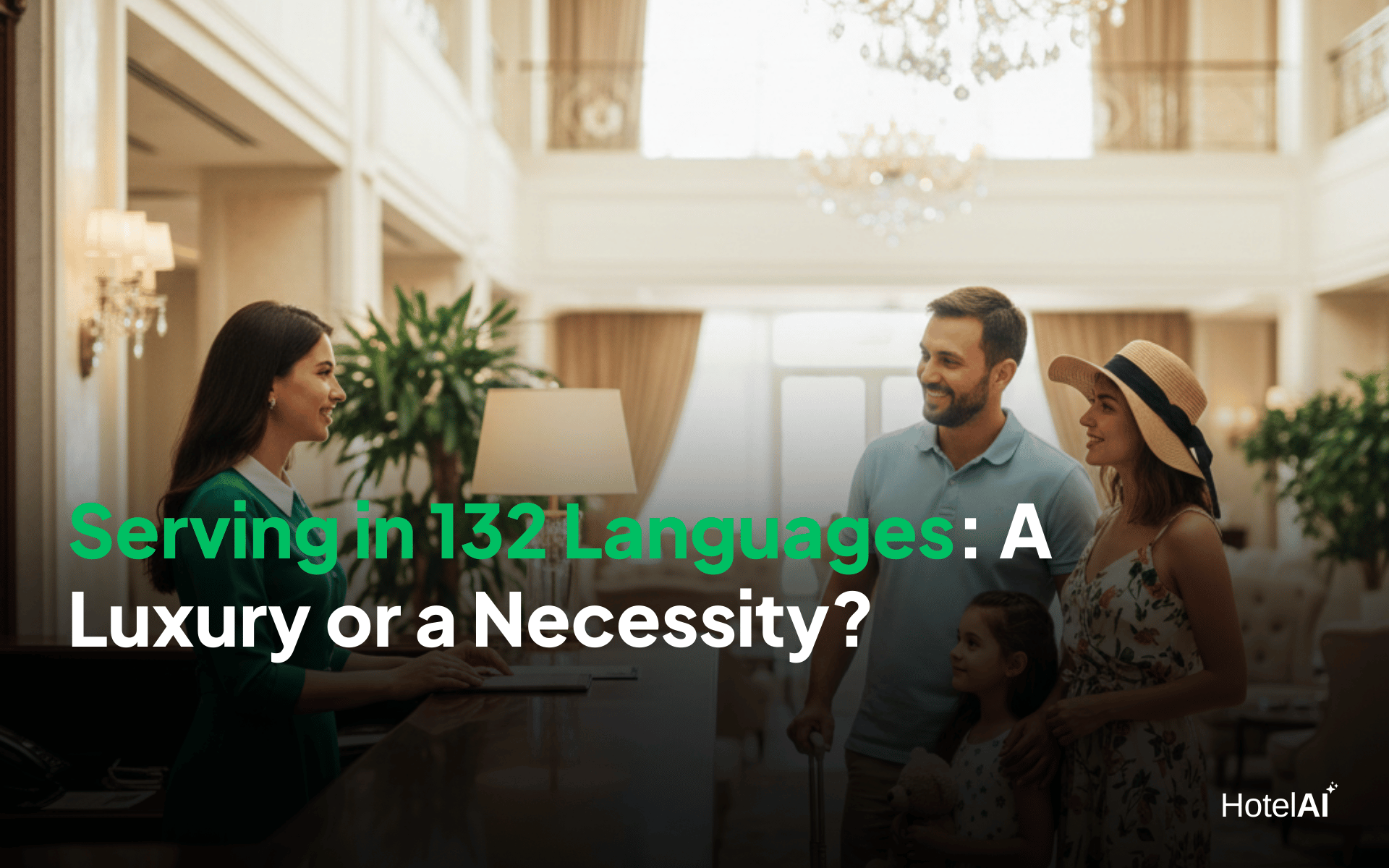
Today, I want to poke a hole in that giant balloon we call "globalization" in the hospitality industry. It’s 2026, and everyone is throwing around terms like "global market" and "international standards," but when a guest walks through the door—or sends a message while they’re still on their way—and asks a question in their own language, watching the front desk struggle with Google Translate is, frankly, heart-wrenching.
Let’s be honest: expecting every guest in the world to speak perfect English is just laziness. The reality is this: a person earns their money in their own language, they dream of their vacation in their own language, yet we tell them, "I’ll only serve you if you speak my language (or English)." So, in this day and age, is providing service in 132 languages really a luxury, or has it become a matter of survival?
The Psychological Power of Saying "Hello" in Their Language
Having spent years in operations, I know one thing for sure: the moment a guest receives an answer in their native tongue, their guard drops instantly. That familiar feeling of "uncertainty in a foreign place" is suddenly replaced by the comfort of feeling at home.
Imagine a guest from Japan messaging you on WhatsApp while en route, and finding an assistant that responds in flawless Japanese within seconds. At that moment, your hotel’s RevPAR or star rating becomes secondary to them. Why? Because you’ve fulfilled their most basic need: the feeling of being "understood." This isn't just politeness; it’s a massive trust-building exercise. And trust always translates to higher loyalty and better review scores.
The Language Barrier in Lead Management: The One That Got Away
Our marketing teams spend a fortune to collect leads from different countries and run global ads. But then what happens? A prospective guest from Portugal asks a specific question, and because no one on the team speaks the language, the response is either delayed or sent in a broken translation. The result? That booking flies straight to a competitor.
When we integrated 132 languages into Hotel Desk, we knew this wasn't just a "show-off" feature. This is a direct sales-boosting strategy. A lead who is greeted politely in their own language is 70% more likely to complete that booking. In 2026, language is no longer just a tool for communication; it’s the sharpest sales weapon in high-quality tourism.
A Polyglot That Eases the Staff Burden
"But Sevara," I hear you say, "where are we supposed to find staff who speak every language?" You won't. And even if you did, you couldn't afford their salaries! We’re already in the middle of a personnel crisis; we can’t find qualified staff as it is, so demanding they speak 10 languages is just wishful thinking.
This is where the beauty of a smart assistant comes in. My colleague at the front desk only needs to know their own language, while the AI working in the background hosts the guest in 132 languages. The staff doesn't get exhausted, and the guest is delighted. So, this isn't a luxury; it’s about taking that heavy burden of "miscommunication" off your staff’s shoulders and throwing it in the bin.
The Bottom Line...
Expecting guests from all over the world while only responding in one or two languages is like only opening your door halfway. If you truly want to be a global player and fill those occupancy numbers from every market, you must speak your guest’s language.
132 languages isn't a luxury; it’s the most professional way to say to your guest, "You are valuable to me." What’s the language that causes the most "communication accidents" at your hotel? Or have you ever thought, "If only we spoke that language, we wouldn't have missed that guest"? 👇
About the Authors
Sevara ARANCI
Connect on LinkedInCo-Founder, HotelAI
Co-Founder of Hotel AI | AI Assistant Speaking 132 Languages & Reducing Staff Workload by 80% | Tourism Tech Expert. Graduate of Akdeniz University Faculty of Tourism.

Erkan ARANCI
Connect on LinkedInCo-Founder & CTO, HotelAI
Co-Founder & CTO of Hotel AI | Architect of Web, Mobile & Desktop Integration Systems | Full Stack Developer.